The Graduate Student Experience
Reimagining Graduate Education: Innovating for a New Era
April 12-14, 2027
Atlanta, GA
Join national leaders exploring the future of graduate and professional education and advancing student success from prospect to professional.
How Is Graduate Education Changing?
Graduate education is entering a period of profound change. Institutions are responding to evolving student needs, changing funding models, advances in artificial intelligence, workforce demands, and growing attention to mentorship, well-being, and professional development. Improving the graduate and professional student experience requires institutions to think holistically about the environments, relationships, and experiences that support students from prospect to professional.
Co-hosted by the Gardner Institute and Georgia Tech, the Graduate Student Experience brings together institutional leaders, faculty, researchers, student affairs professionals, graduate educators, and students to explore emerging research, share promising practices, and strengthen the graduate and professional student experience through institutional learning and collaboration.
As part of the Gardner Institute’s Graduate & Professional Student Experience Initiative, the conference also marks the first national convening co-hosted with Georgia Tech and builds on the ideas presented in the forthcoming book, Transforming the Graduate Student Experience: A Call to Expand the Student Success Imperative (Johns Hopkins University Press). Together, these efforts are helping shape a national conversation about the future of the graduate and professional student experience.
Defining and Transforming the Graduate Student Experience
What Is the Graduate Student Experience
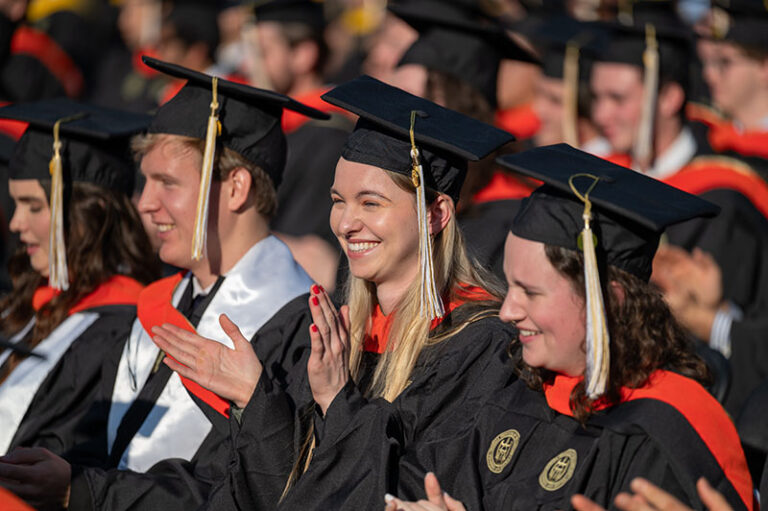
The “Graduate Student Experience™” refers to the comprehensive range of experiences, both positive and negative, that graduate students encounter during their academic journey. This includes their curricular and, where applicable, co-curricular activities. The term also represents an aspirational vision for what this experience should ideally be, emphasizing respect, dignity, and fairness. It embodies an institutional philosophy advocating for the proper treatment and valuing of graduate students. Efforts to improve the graduate student experience focus on achieving better outcomes in retention, degree completion, and employment. The concept encompasses a holistic view of the student experience, considering intellectual, personal, social, vocational aspects.
At its core, the Graduate Student Experience is about understanding and improving the experiences that shape learning, belonging, professional growth, and success throughout graduate and professional education.
Why Attend the Graduate Student Experience?
The Graduate Student Experience brings together higher education leaders, faculty, student affairs professionals, administrators, researchers, graduate educators, students, and practitioners from across the country to explore the experiences that define graduate education and how institutions can improve outcomes for graduate and professional students. Through engaging discussions, collaborative learning, emerging research, and the exchange of promising practices, participants explore the ideas, strategies, and institutional approaches that strengthen the graduate and professional student experience.
Whether you are seeking new perspectives, practical strategies, opportunities to collaborate with colleagues, or insights you can apply on your own campus, the conference provides a unique forum for learning, connection, and shared problem-solving. Participants leave with new ideas, stronger professional networks, and a broader understanding of how institutions are supporting graduate and professional students from prospect to professional.
Who Should Attend?
The Graduate Student Experience Conference brings together the diverse partnerships needed to strengthen graduate and professional student success. Designed for higher education leaders and practitioners from the United States and around the world, the conference creates opportunities to learn from multiple perspectives, share promising practices, and explore collaborative approaches to improving graduate education.
Participants may include:
- Graduate school deans, administrators, and graduate program directors
- Graduate faculty and staff
- Student affairs and student success professionals
- Institutional leaders and academic administrators
- Researchers, institutional research, and assessment professionals
- Undergraduate educators who support graduate student preparation and success
- Graduate and professional students
- Accrediting organization staff
- Employers and organizational leaders who hire graduate and professional students
- Foundation and policy leaders
- Faculty and staff who support graduate and professional student success
- International colleagues committed to advancing graduate and professional education
Conference Themes
The conference explores the future of graduate and professional education and the institutional conditions that shape graduate and student success. Sessions are organized around three interconnected themes:
Embracing Graduate and Professional Students Within the Student Success Movement
Explore how institutions can intentionally include graduate and professional students within broader student success efforts while recognizing their unique needs, experiences, and educational journeys.
Understanding and Responding to Contemporary Graduate Student Needs
Examine the realities facing today’s graduate and professional students, including belonging, mentorship, professional formation, well-being, career preparation, and evolving student expectations.
Strengthening the Graduate & Professional Student Experience Through Institutional Innovation
- Funding Models
- Systems and Policies
- Student Well-Being
- Strategic AI Usage
- Pedagogy
Call for Proposals
Are you working to improve the graduate and professional student experience through teaching, research, leadership, policy, student support, or program administration? We invite you to submit a proposal for the 2027 Graduate Student Experience Conference and share innovative practices, emerging research, lessons learned, and strategies that are helping institutions better support graduate and professional student success. Join colleagues from across higher education in shaping conversations about the future of graduate education.
Proposal submissions close October 15, 2026
Types of Proposals
All sessions will be 45 minutes.
Click on the titles below for details
Standard Presentation
A presentation featuring one to four presenters who share research, innovative practices, institutional initiatives, or evidence-informed strategies that advance understanding of the graduate and professional student experience.
Panel Discussion
A moderated discussion featuring one moderator and up to four panelists who explore a common theme or issue from multiple perspectives.
Problem-Solving Session
An interactive working session focused on a specific problem of practice. Presenters and participants work together to examine challenges and identify practical solutions.
Case Study
A presentation highlighting one or more institutional initiatives that address a common challenge or opportunity related to the graduate and professional student experience. Sessions should conclude with key findings, lessons learned, and implications for institutional practice.
Policy Examination
A discussion exploring institutional, state, or national policies that influence graduate and professional student success. Presenters examine challenges, consider alternatives, and encourage discussion about policy implications.
Showcase
In the Showcase format, each presenter has three minutes to introduce their research, initiative, or innovation. After hearing all presentations, participants select one or two topics to explore in greater depth through facilitated discussions.
Share your research, innovative practices, and institutional insights while helping shape the future of graduate and professional student success.
Pre- Conference Workshops- April 12
Click on the titles below for session details
How to Create a Graduate Student First-Year Seminar Course
9 AM – 12 PM
The workshop will begin with an overview of the GT6000 course along with the benefits of graduate student first-year seminar courses. We will then transition to small groups to have dialogue on the ideal characteristics and traits of a graduate transition course. After sharing with the larger group, participants will develop an initial framework, with facilitators available to provide support, of a graduate student first-year experience course tailored for their campus. The workshop will conclude with participants sharing their framework with the larger group.
Workshop aims:
• Participants will be introduced to the design strategy and scope of the GT6000 course
• Participants will engage with others seeking to develop a first-year experience course on their campus
• Participants will evaluate their own campus to inform an initial development strategy
Learning outcomes:
• Participants will understand the design strategy and scope of the GT6000 course
• Participants will gain ideas from other participants seeking to develop a graduate student first-year experience course
• Participants will develop an initial framework of a graduate student first-year experience course tailored for their campus
Freedom of Expression in the US – Challenges & Opportunities for the Graduate Student Experience
1- 4 PM
Presenters: Luoluo Hong and Malcolm Robinson
This pre-conference session will utilize a number of formats in order toactively engage and involve participants, including small and dyad group discussions, anonymous polling activities, individual reflection time, dynamic lecture, and open Q&A.
Workshop aims:
Free speech has become a polarizing, controversial topic at many US campuses; this uniquely American construct generates distinctive cultural, political and social impacts for graduate education. This pre-conference will review the federal policies and regulations that shape academic freedom and freedom of expression in the university setting – especially as they relate to the graduate student experience. Then, highlighting the experience of one large, public, research institution as they pivoted to respond to an evolving federal landscape, participants will explore the challenges and opportunities associated with free speech issues.
Learning outcomes:
Following this session, participants will be able to: (1) Describe how the 1st Amendment of the US Constitution, Title VI of the Civil Rights Act of 1964, and other presidential executive orders and other federal policies govern speech and other expressive activity on campus; (2) List and define some of the guiding principles shaping speech on US campuses, including The Chicago Principles, AAUP’s statement on institutional neutrality, etc.; (3) Describe the ways in which US concepts of free speech rights shape the graduate student experience; (4) Identify core programmatic, policy and procedural elements that are considered best practices in protecting freedom of expression and inquiry in higher education; and (5) Compare and contrast the challenges and opportunities invoked by this work.
Examining the Graduate Student Experience Through Institution-Wide Self-Study
9 AM – 12 PM
Presenters: John Gardner & Drew Koch
Innovating the Graduate Student Experience: Strategies for Institutional Improvement
1 – 4 PM
Presenters: John Gardner, Brandon Smith, Vicki McGillin, Felita Williams, and Bonnie Ferri
Featured Speakers
Hear from nationally recognized leaders whose work is shaping the future of graduate education, student success, philanthropy, and higher education leadership.
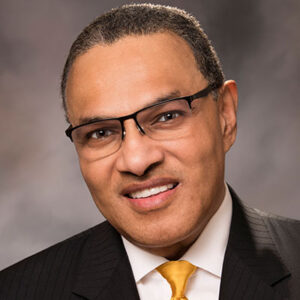
Freeman A. Hrabowski III, President Emeritus, University of Maryland, Baltimore County (UMBC)
“Rethinking The Graduate & Professional Student Experience: Mindset, Resilience and Hope”
Hrabowski will focus on the importance of culture, mentorship and student success as institutions address student needs and prepare them for a rapidly changing workforce. Drawing on decades of leadership in academic innovation, he will challenge participants to build environments that take advantage of such advanced technology as AI while embracing bold, equity-centered strategies that reflect resilience and hope as students prepare to lead and problem-solve in the future.

DeAngela Burns-Wallace, President and Chief Executive Officer, Ewing Marion Kauffman Foundation
“From Prospect to Professional: Redesigning Graduate Education for a Changing World”
Graduate education must evolve alongside the students it serves and the workforce and economic realities they will enter. Dr. Burns-Wallace challenges institutions to redesign the full journey from prospect to professional, connecting student experience with professional purpose and economic mobility. Drawing on lessons across higher education, public service, and philanthropy, she explores how leadership, data, and institutional innovation can create navigable pathways that help students enter, thrive, and translate advanced learning into lasting impact.

Luoluo Hong, Vice President for Student Engagement and Well-Being, Georgia Institute of Technology
“On Crisis, Courage and Collaboration: Enhancing Graduate Student Engagement & Well-Being In An Era of Disruption”
Higher education in the US is undergoing an unprecedented period of disruption and transformation, with particularly significant impacts and implications on graduate students. This session will explore emerging and evolving national trends, as well as promising practices, for enhancing graduate students’ holistic experience and success. The speaker will share insights from Georgia Tech’s own journey to expand and strengthen academic and student affairs collaborations in response to evolving student needs. She will engage participants’ hearts, minds and hopes via provocative polling, reflection moments, and hearty laughter.
Fees
Register before January 31, 2027 for the early bird rate: $995
| Registration Type | Fee |
|---|---|
| Early Bird (register by January 31, 2027) | $995 |
| Regular Registration | $1,075 |
| Student Registration (graduate and undergraduate) | $495 |
Optional Pre-Conference Workshops
$200 for half day workshops
$375 for full day workshoops
Transformation Institution Discount
Participants from Gardner Institute Transformation institutions receive a 20% discount on posted registration fees.
Registration Includes
Your conference registration includes:
- Opening reception
- Two breakfasts
- Two lunches
- Refreshment breaks
- Conference materials
Refund and Transfer Policy
Refund requests received on or before February 15, 2027, are subject to a 5% processing fee. No refunds will be issued after February 15, 2027.
Registrations may be transferred to another participant through March 25, 2027. Transfer requests must be submitted in writing to events@gardnerinstitute.org. No transfers will be accepted after March 25, 2027.
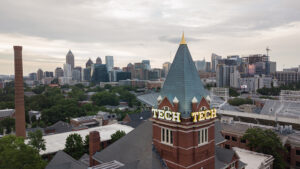
Conference Location Information:
Georgia Tech Hotel & Conference Center
800 Spring St NW, Atlanta, GA 30308
The Graduate Student Experience Conference will be held at the Georgia Tech Hotel & Conference Center, located in the heart of Midtown Atlanta adjacent to the Georgia Tech campus.
Hotel Information:
Georgia Tech Hotel & Conference Center, 800 Spring St NW, Atlanta, GA 30308
$229 per night
Air Service:
Delta Air Lines Discount
Delta Air Lines is pleased to offer special discounts for attendees of the Graduate Student Experience.
- Meeting Event Code: NY4VW
- Book online using the conference flight link.
- Or call Delta Conferences and Events® at 1-800-328-1111, Monday through Friday, 8:00 a.m. to 8:00 p.m. (EST), and reference Meeting Event Code NY4VW.
There is no service fee for reservations booked and ticketed through Delta’s conference reservation line.
About the Organizers:
The Graduate Student Experience is presented by the Gardner Institute, in partnership with Georgia Tech’s Office of Graduate and Postdoctoral Education.
About the Gardner Institute
The non-profit, twenty-seven year old, Gardner Institute partners with colleges, universities, systems, and philanthropies to drive long-term transformation in postsecondary education. Through rigorous analysis, holistic planning, and targeted institutional change, we help faculty, staff, and leaders redesign student experiences so more learners persist, complete, and graduate.
About Georgia Tech
The Office of Graduate and Postdoctoral Education (GPE) advances Georgia Tech’s
mission by supporting the success and well-being of more than 35,000 graduate students and postdoctoral scholars. As part of the Office of the Provost, GPE provides services, advocacy, and professional development programs that foster academic excellence, career readiness, and well-being.
In addition to serving as a champion for graduate and postdoc needs, the office leads innovation and oversight in graduate education, shaping policies, programs, and partnerships that strengthen Georgia Tech’s global impact.